
We are currently raising Kunekune pigs in Alberta, Canada. We are no stranger to the harshness of winter. Let us give you a few tips to make raising Kunekunes in extremely cold climates easier for you and your pigs.
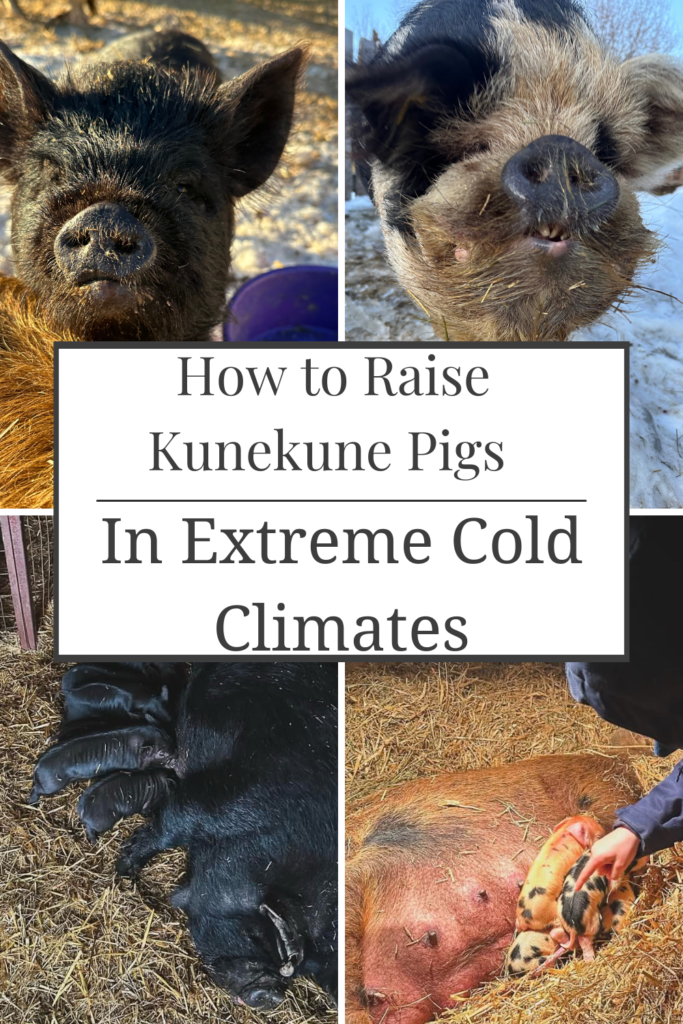
Preparing your Kunekune pigs for Winter
When preparing your Kunekunes for a possibly harsh winter, you need to begin preparing months in advance, This means, that you need to start maintaining an ideal body condition for your animals. You do not want them going through a harsh winter being too thin or obese. An ideal body condition is the foundation for keeping healthy animals. Especially in stressful environments (ei. extreme cold temperature, wind, significant temperature fluctuations).
We are constantly monitoring body conditions all year round, although we start really looking at making feeding adjustments 6-8 weeks prior to possible weather changes. For where we will, we anticipate to start seeing winter weather by the third week of October. Winter weather for me means that we may reach temperatures of -20C overnight without any warning. I need my animals to be able to handle that to the best of their abilities.
https://americankunekunepigsociety.org/wp-content/uploads/2024/03/KuneKune-Body-Scoring.pdf

Shelter
When I see we are getting that first cold day or night, we ensure that everyone has access to a draft free shelter.
“Draft free” means that there or no cross breezes. The doorway can be open but do not want air blowing through it. Covering doors with a tarp, heavy blanket or canvas flap will help keep drafts out.
You do not want a completely sealed up shelter without ventilation. A lack of fresh air and ventilation can become the perfect environment to develop respiratory illness (pneumonia).
Selecting the right bedding for your Kunekune
Secondly, we ensure that they have adequate bedding.
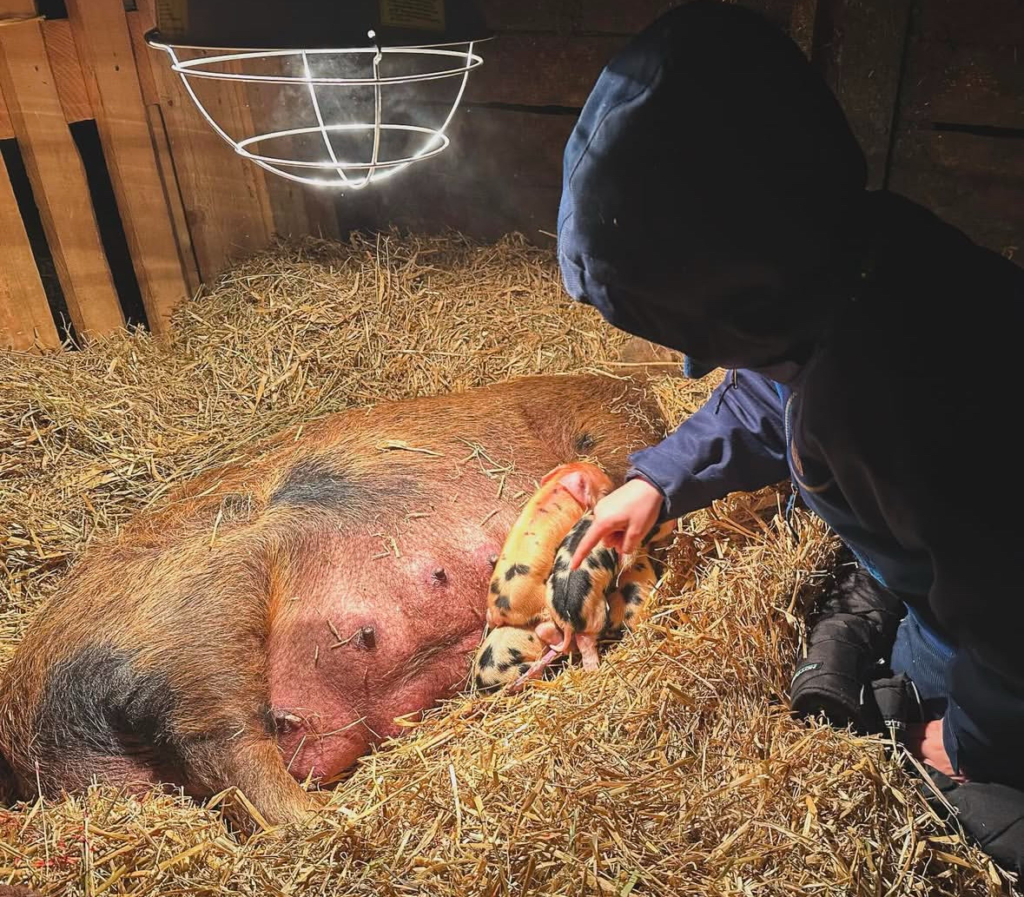
Straw is your best bet for this. Its hollow stalks are great heat insulators. This will keep your animals much warmer in the frigid weather. Straw is also very absorbent and is less dusty than alternatives. We like to use the “deep bedding” method.
The deep bedding method means that rather than removing all of the soiled/old bedding, we add fresh layers over top. As you keep adding fresh straw, the layers on the bottom will begin to decompose. As the layers decompose, the bacteria will create its own heat and will help insulate from the frozen ground.
This bedding will all be removed later in the spring. We like to pile ours up for 6-12 months then add it to our garden. It makes fantastic garden soil!
Wood shavings are an ok option for keeping animals warm. We have used wood shavings in the past but we found that the animals were not as comfortable. They required more feed through cold snaps. Wood shavings are not as good for insulation against the cold. They are also extremely absorbent. It takes less moisture to make the shavings freeze. Once the bedding freezes it will do more harm than good during cold snaps.
Hay for bedding is ok but not as good as straw. When looking at your hay, you will notice that the pieces are not hollow. That hollowness is what creates heat insulations as the animals lay down in it.
We do put hay (alfalfa hay) in the shelters on top of the straw. Kunekunes are very cleans, so I know they won’t urinate or defecate where they eat or sleep. The hay that they don’t will left in the straw bedding for extra insulations.

Feeding your Kunekune for Cold Weather
Feeding Kunekunes for extreme cold weather is fairly simple. I always think that we want them to have enough food for the extra calories they are burning. We make sure that they always have access to hay. We prefer to use alfalfa hay, but any hay available is better than nothing. Having calories available when they need them is important because wFe cannot be out there checking then 24/7. High calorie grain is also very important. A hog grower pellet or bulk grains (barley, oats and peas) with a supplement is ideal.
https://docs.google.com/document/d/1bUf4XpcxLrPMS7lpQEF_hF-SKvvZ721RaAI5rJavAUQ/edit?tab=t.0
Water
Staying hydrated is also extremely important. The body burns a lot of calories trying to stay warm. Eating the snow is NOT a sufficient source of water.
Having full time access to fresh water for your Kune can be difficult. They tend to tip, flip or damage dishes. We have found the shallow, rubber feed dishes are the best during the winter. They are essentially indestructible and the solid ice is easy to remove. The down side is, that they will freeze relatively quickly in the extreme cold.
https://americankunekunepigsociety.org/wp-content/uploads/2022/10/Feeders-and-Waterers-r1.pdf
Heated water dishes are not great unless you can secure it to the ground some how. Unfortunately we have not figured that out yet. Our Kunekunes like to tip the dishes over and have damaged the plastic.

Heat Lamps
We use heat lamps as a last resort in the most extreme temperatures. Our goal is to always acclimatize our animals to the coldest weather possible as long as they are comfortable and safe. We have a large selection of heat lamps and bulbs for when we need them. A healthy, mature animal, with a good body condition, shelter and bedding should not require a heat lamp. Especially if they have another Kunekune to be bedded down with to share body heat.
There are situations where we will give heat lamps for the majority of the winter months. Young piglets with minimal body fat will require supplemental heat. Along with animals who are thin, ill or geriatric.
**Always be cautious when using heat lamps unsupervised. Never hang them low enough that an animal can touch or bump them. Ensure that they are always safely secured to ensure they wont fall to the ground or onto the bedding. Ours are always secured with a heavy wire or chain. Check your bulbs and lamps regularly for damage or dust build up. Keep clean and dry.
https://www.homehardware.ca/en/brooder-lamp-holder/p/5220496
If you are raising Kunekune pigs for butchering, check out our guide to render your own lard!
Leave a Reply